
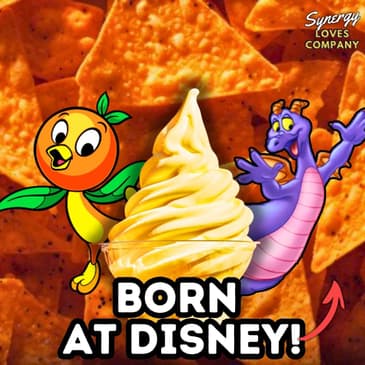
From a purple dragon born out of a Kodak sponsorship to the world's most popular tortilla chip — sometimes the best Disney magic happens when nobody planned it…..and a little Corporate Sponsorship Synergy!
In this video, we're looking at four accidental icons that only exist because a corporation made a deal with Disney: Figment, Orange Bird, Dole Whip, and Doritos. All started as products of a Disney Parks sponsorship. All ended up way bigger than the contracts that created them.
Kodak, the company that helped us get Figment, was one of Disneyland's Original 33 sponsors — the companies that made the park possible in 1955. I'm launching a Patreon-exclusive series called Club 33 that digs into every single one of them. If you want to go deeper on the corporate histories that built Disneyland.
Check it out by becoming a Patreon! https://patreon.com/synergylovescompany?utm_medium=unknown\&utm_source=join_link\&utm_campaign=creatorshare_creator\&utm_content=copyLink
My next video is already up over there too it’s all about Coke vs. Pepsi — the cola wars that played out inside Disneyland in 1955. Patreon Subscribers can watch it early!
Subscribe for more Disney connections: https://www.youtube.com/@SynergyLovesCompany?sub_confirmation=1 Podcast: Listen to Synergy Loves Company → https://synergylovescompany.com
Support the Show: Shop official Synergy Loves Company merch → https://shop.synergylovescompany.com
Affiliate Disclosure: Some links above may be affiliate links. If you click and purchase, I may receive a small commission at no extra cost to you. Thank you for supporting the channel!
Connect with Me: Instagram → https://www.instagram.com/synergylovescompany
Bluesky → https://bsky.app/profile/erichsynergy.bsky.social
Facebook → https://www.facebook.com/synergylovescompany
This podcast is powered by Pinecast.
00:00 --> 20:53 The Carousel of Progress as we knew it has played through its final scene. That family in the theater celebrating the past with all their gadgets and gizmos is a beloved attraction that is moving into its next phase. But did you know that its first iteration was a giant commercial for General Electric? Like the company that makes all those appliances and electronics? It was part of the General Electric Pavilion at the 1964-1965 New York World's Fair. That's why John talked so much about appliances. It was a big corporate sponsorship. In fact, all those pavilions built for the 1964 World's Fair were corporate money sponsoring Imagineering research and development. If we go back a decade earlier, Disneyland itself couldn't have opened its gates in 1955 without sponsors footing the bill for a chunk of the park. That's even where the idea of Club 33 may have come from. Disney thanking 33 corporate sponsors with an exclusive club. So today we're taking a look at 4 times when the Disney Parks corporate sponsorships accidentally created icons, from every Disney fan's favorite theme park characters to snacks you can find in your grocery store right now. Hey, this is Synergy Loves Company, where we explore how Disney connects to everything. I'm Eric, and corporate sponsors have always been a part of the Disney parks, so we're taking a look back at those times when it all started with a corporate sponsorship. And this first one needs a little imagination. Walt's EPCOT was supposed to be a city of the future that showcased the world's cutting-edge technology through corporate sponsorships and showcases, and when that idea transformed into the permanent World's Fair that we ended up with, corporate sponsorships remained a big part of it. Every pavilion had a sponsor. While EPCOT's in development back in the 1970s, Imagineer Tony Baxter was bouncing between pavilion ideas, trying to see where he could make an impact on this park. He had been working on the Land Pavilion, but his concept got shelved when the land's corporate sponsor, Kraft Foods, wanted the pavilion to be more about the food that we get from the land. So he ends up pitching Kodak on a pavilion about creativity and imagination. Kodak loves it, and they're all in. To make it happen, he needs a concept, and instead of working from scratch, he goes back to his shelf of ideas. Years earlier, he had been developing a Disneyland expansion called Discovery Bay that never got built. And inside that unbuilt land concept was this attraction called Professor Marvel's Gallery. It actually got as far as artist Steve Kirk sculpting a model for it. The story is that Kirk looked at the art thought that Professor Marvel needed something to hold in his hand, so Kirk gave him a tiny dragon— just Professor Marvel's little unnamed pet. An accessory. Tony Baxter brought that Professor Marvel concept over to Kodak for the imagination pitch, with the model and everything, and during that meeting Kodak's executives looked at Kirk's little sculpture and they loved that little dragon. They thought he was the star of the whole concept. Tony Baxter hadn't even planned on the dragon being anything more than just like a detail, but he said, yeah, that's right, the dragon is the, the whole star of the show. Now all of a sudden this little dragon has main character energy. But there was still one problem they had. The little dragon was green because, I mean, well, Dragons tend to be green, but Kodak hates green because green is their rival Fujifilm's color. So the, the dragon could not be green. It got a whole makeover and its colors became purple because we never saw a purple dragon before. That's pretty imaginative. And a purple dragon would look great in a Kodak yellow sweater with some red stripes. Now this random pet that got upgraded to main character and color switched didn't actually have a name originally, but Tony Baxter was watching a rerun of Magnum, P.I., and in the episode, a character hears a strange sound in his yard, and it's a goat, but Magnum gets told it's just a figment of his imagination, and he snapped back that figments don't eat rare tropical flowers. And when Tony Baxter heard that word, he had the name. Figment. And when Figment's attraction, Journey Into Imagination, opened in Epcot, it had this kind of a strange rule. At the time, classic Disney characters like Mickey and Minnie and the gang were not allowed inside of Epcot in those early years. The park was supposed to feel separate from the Magic Kingdom. It's its own thing. So Figment really didn't have any competition. He was pretty much The only beloved character in the entire park, and guests really latched onto him almost by default. But truthfully, he's really a great character. Flash forward over the years and fans are still attached. When they tried to remove him from the Imagination Pavilion in 1999, the fans revolted and he came back pretty quickly after that. The ride wasn't even close to what it once was, but at least he was back in Journey to Imagination with Figment. In more recent years, Figment has become an icon of Epcot, serving as the character ambassador for so, so many of the Epcot festivals. And they even opened a new meet and greet with Figment in 2023, and I met him because I had to, because he's my favorite. I'm gonna get, get the shirt on right now. The purple Figment with that yellow sweater exists the way we know him all because of Kodak. Disney and Kodak actually go way back. Kodak was one of the first sponsors to sign on for Disneyland back in I'm actually doing a whole ongoing series about all those 33 original sponsors that maybe have something to do with Club 33, and it's all over on my Patreon. We're talking all about what they did for Disney back then and how they're still connected to the Disney Company. So you can support the show and check it out. There's a link down below to sign up for the Patreon. Okay, okay, I get it. Figment, he's an icon, but he's really only in the parks. What about a Disney Parks corporate sponsor that shaped a character who brought Disney magic outside the parks? When Disney first made their push into Central Florida, they wanted some of their park sponsors to reflect their local surroundings, show the locals that they wanted to plant roots in Florida, that they were part of the community too. The Florida Citrus Commission and Disney worked out a deal that would secure sponsorship of this Tropical Serenade, or Florida's version of the Tiki Room, and the Sunshine Tree Terrace. And in exchange, Disney would make a spokescharacter for Florida Citrus. Disney handed off this mascot job to Bob Moore and Don McLaughlin, a couple of designers who'd already spent years drawing posters and characters for the studio. They worked out a bunch of citrusy concepts before settling on something that I think is pretty amazing. It's a little bird, but instead of just a regular bird, this one would be made out of orange parts, like leaves and peels and oranges and stuff. His head is an orange, and his little wings, they look like these little leaves from an orange tree. And of course his color is orange. I mean, he's an orange. He was an orange bird made of orange parts, so they called him Orange Bird. And to fill in his backstory, Disney pulled out all the stops. They brought in the Sherman Brothers, that same Disney Legend songwriting team behind It's a Small World, It's a Great Big Beautiful Tomorrow from Carousel of Progress, Figment's theme, Imagination. I mean, I could just keep listing Sherman Brothers songs, but that would just be the rest of the video. There's like too many. Anyway, the Shermans wrote a theme song and a bunch of other tunes for a whole Orange Bird record album, one that told his whole origin story set to music. But Orange Bird doesn't make a sound. He doesn't speak or sing, which was okay with the Florida Citrus Commission because their spokesperson, Anita Bryant, was a singer. Anita Bryant fronted the whole ad campaign. She narrated that Orange Bird record and she sang the jingle. Her face was plastered all across print ads and TV spots telling America that breakfast without orange juice was like a day without sunshine. Orange Bird was right there with her in all of those commercials. The two of them were basically a package deal in the public eye, which was not a good thing for our hero, the Orange Bird, because Anita Bryant was super homophobic and became a loud public voice against gay rights in the late '70s. And when this happened, activists called for a boycott of Bryant and Florida Citrus, and her career fell apart practically overnight, rightfully so. But the Orange Bird didn't do anything wrong. He was just a cartoon character who couldn't sing or talk, and he got pulled down by her anyway. His ad campaign just went away, and by 1987, Disney and the Florida Citrus Commission let their whole sponsorship deal expire. And so Orange Bird faded into obscurity, and maybe you'd only catch an old photo with him or an old home movie. He wasn't around like he used to. He was only the kind of character that diehard Disney Parks fans even remembered that he existed at all. But his story doesn't end there. Oh no. In 2004, Tokyo Disneyland brought Orange Bird back for their Orange Day holiday, a spring tradition where couples exchange oranges and orange-colored gifts. Japanese fans championed him, and that popularity eventually worked its way back across the Pacific, and it got big enough that in 2012, Walt Disney World brought the Orange Bird back home, restoring his figure to the Sunshine Tree Terrace where he'd been missing for years. And we all love him today. He gets in on those Epcot festivals too. But okay, Orange Bird is a corporate-sponsored icon in the Disney parks. Again, he like got out in the '70s with those commercials, but still today he's only in the Disney parks. But there's another fruity icon that got its start in Adventureland, just like Orange Bird, but now it's spread beyond the parks, and you might even be able to find it close to home. When it opened in the late '60s, Disney Disney's Enchanted Tiki Room was sponsored by United Airlines. For a decade, the idea was that walking into the Tiki Room show felt like stepping off a plane in Hawaii. But in 1976, United walked away— it didn't make that much sense— and Dole stepped in instead. That makes a lot of sense. Dole and pineapples had been linked together since the company started in Hawaii back in 1901, so the Tiki Room sponsored by Dole didn't need any explaining. It was a better fit than United. With the sponsorship, Dole started serving their products around the attraction, and over at Walt Disney World's version, the Tropical Serenade, you know, Orange Bird's old stomping grounds, Dole tried something simple: vanilla soft serve topped with pineapple chunks. It was great in Disneyland, but that's another story for Walt Disney World. Orlando, if you haven't noticed, can be brutally hot and humid for most of the year, and that ice cream just did not seem to hold up in that heat. It melted into a mess before the guests even finished it. So Dole took it as a challenge. They handed the problem to a food scientist named Kathy Westphal working out of the Dole Technical Center in San Jose. She got tasked with building something that looked and tasted like soft serve, But something that could survive Florida's climate without immediately melting. Even better would be if it were dairy-free and put pineapple as the star instead of just the add-on topping. That is actually a harder food science problem than it sounds because most of what makes soft serve feel smooth and creamy comes from the dairy that she wasn't allowed to use. But she did it. And in 1984, at the Aloha Isle in Walt Disney World, Dole Whip, an airy whipped pineapple treat that better held its shape in the Florida heat, debuted. Then Disneyland began selling it at the Tiki Juice Bar. Nobody at Dole really expected much from it. The company didn't really push it. They would really only sell it at the Disney parks, and they could sell it at the Dole Plantation in Hawaii, but that's kind of it. But because they didn't widely release it, Dole Whip became exclusive. People associated it with Disney because you could pretty much only get it at the Disney parks. Dole Whip lines became just as much of a part of Adventureland as the attractions, and it developed a cult following that grew and boomed into a widespread devotion with the rise of the internet and Instagram food pics. New flavors started popping up, merchandise followed, shirts and pins, plush toys, even mouse ears shaped like a swirl of Dole Whip. Local ice cream shops around the United States started asking Dole for distribution or trying to make their own versions of it, and it started to seep out of the parks. And finally, in 2023, Dole put Dole Whip on actual supermarket shelves. And you can probably find a local ice cream shop that offers Dole Whip in your town today. It's not a Disney-exclusive thing anymore. It's just a cool treat for a hot day, one that happens to have this whole hidden history behind it. Some Disney history. But there is another snack that started at the Disney parks that's got zero Disney association left in it at all. Something you've probably even eaten recently without considering the fact that it originally came from Disneyland. Back in the early 1960s, Disneyland had a restaurant in Frontierland called Casa de Fritos, sponsored by Frito-Lay, one of those original 33 sponsors. It served up tacos and enchiladas in Frontierland right next to the mine train through Nature's Wonderland. They even had this dish called Taco in a Cup, which kinda seems to have been some sort of like prototype of a walking taco, if you've ever enjoyed one of those. But that's not— What? the snack we're here to talk about. Casa de Fritos was Mexican food with a corporate snack company's name stamped on the building, and every meal came with a free bag of Fritos on the side. They even had this cool interactive Frito vending machine where Frito the Kid would call for the chips to be delivered from the mine, maybe mining Fritos down there. They were going through produce stacks of tortillas every day, but whatever didn't get used got thrown away. They needed fresh tortillas. The story goes that a salesman from Alex Foods, the food service company that supplied Casa de Fritos with tortillas and produce, well, he noticed all those wasted tortillas and gave them an idea. If you cut them into triangles and then fry them up, maybe give them a little seasoning, they'd be delicious. This was something authentic done in Mexico, a snack called totopos. The kitchen staff tried it, and Disneyland guests loved it. The Fritos came from that cool mine, but these totopos were really the golden snack. They decided to name the chips Doritos, which translates to little pieces of gold in Spanish, but it was kind of a problem when people wanted the Doritos more than they wanted the Fritos. Casa de Fritos was sponsored by Frito-Lays, and Doritos Weren't a thing. Yet. Word spread, though, quickly through Frito-Lay's own ranks, and in 1964, marketing VP Arch West saw just how popular this restaurant snack had gotten, and he made a deal to collaborate with Alex Foods and start producing Doritos at scale. And within a couple of years, Frito-Lay cut Alex Foods out and they brought the whole operation in-house, And shipped Doritos nationwide. From there, this snack was booming. First, it was just plain Doritos, like regular tortilla chips. We don't even have those anymore today. But then taco flavor hit the shelves in 1967. Nacho cheese came out in 1972. That's the, the current flagship we think is regular Doritos now. 1986 is released Cool Ranch. And like today, they have all sorts of Doritos flavors. Some are limited edition. It's not just some, you know, like little rinky-dink little snack anymore. It's one of the biggest chip brands in the entire world. Their bags are everywhere, in vending machines, sitting on the shelf at a gas station or a grocery store. And they're worldwide. They're basically in every country that sells chips at all. You could even get those Doritos Locos Tacos at Taco Bell. Like, I love those things. So this one, Doritos, it hits differently than Figment and Orange Bird and even the Dole Whip. There are tons of people all over the world eating a bag of their favorite flavor of Doritos right now that have never even been to Disneyland. They have no clue that their favorite chips started as like the garbage, like tortilla scraps that almost got thrown away. Gotta love those little pieces of gold. So there we go. Have 4 sponsorships, all built to sell something completely different than what they actually left behind. Kodak wanted people thinking about film. The Florida Citrus Commission wanted people to drink more orange juice. Dole had that pineapple sales goal. And Frito-Lay just wanted a restaurant that could turn a profit and get people to think about Fritos. None of them knew they were creating something that people would be obsessed with decades later. Sponsorship money and Disney magic coming together to sell one product ended up creating something bigger than the product itself. And I'm sure we could keep coming up with more. Maybe there's a part 2 of this video. Are there any other Disney corporate sponsorships that made something new and exciting beyond the parks? Let me know what you could come up with in the comments. I like talking about all these sponsorships. Last time we took a look at Disney and McDonald's. Did you catch that one? Next, I think we're gonna go and do something similar. We're gonna dive into the original Disneyland sponsors and take a look at two of them: Coke and Pepsi. Yep, the Cola Wars were real at Disneyland back in 1955, and that video is actually part of a series that I'm doing on Patreon where you could probably go and watch it now because it's up there early. But if you're gonna wait for it to come down this regular YouTube feed, make sure you're subscribed here on YouTube so you don't miss when it drops. Until Until then, you can watch that McDonald's one next. And thanks for joining me on this look into Figment and Orange Bird, Dole Whip and Doritos. And remember that the Disney magic isn't just in the parks, it's all around us. So keep discovering the magic in everything. Thank you.