
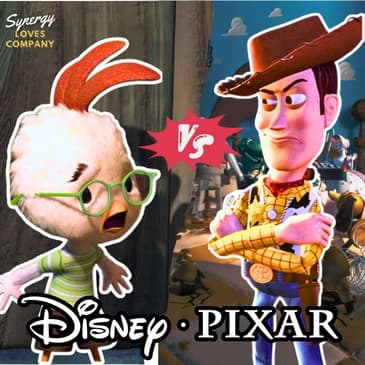
In 1995, Disney was the undisputed king of animation. But behind the scenes, a decade-long war for creative control was just beginning. This is the story of how a "vendor" named Pixar became Disney’s biggest rival, and how Steve Jobs used a string of billion-dollar hits to force a total regime change in Burbank.
From the "Circle 7" secret studio to the high-stakes negotiations over Toy Story 2 and Finding Nemo, we’re exploring the corporate battle that nearly destroyed the Disney/Pixar partnership—and the unlikely friendship between Bob Iger and Steve Jobs that eventually saved it.
In this video, we explore:
- The 1995 Pixar IPO that turned the power dynamic upside down.
- Michael Eisner’s "Experimental Era" and Disney’s struggle for identity.
- The "Sequel War" and the "free" movie that fueled Steve Jobs' resentment.
- Bob Iger’s Hong Kong epiphany and the $7.4 billion deal that changed animation forever.
If you love exploring how Disney connects to the broader world of history, business, and pop culture, make sure to SUBSCRIBE
https://www.youtube.com/@synergylovescompany?sub_confirmation=1
Podcast: Listen to Synergy Loves Company → https://synergylovescompany.com
Support the Show: Shop official Synergy Loves Company merch → https://shop.synergylovescompany.com
Affiliate Disclosure: Some links above may be affiliate links. If you click and purchase, I may receive a small commission at no extra cost to you.
Thank you for supporting the channel!
Connect with Me:
Instagram → https://www.instagram.com/synergylovescompany
Bluesky → https://bsky.app/profile/erichsynergy.bsky.social
Facebook → https://www.facebook.com/synergylovescompany
Credits / Resources: •
Synergy Loves Company is not affiliated with The Walt Disney Company or any of its subsidiaries. • Images and clips are used under fair use for commentary, criticism, and education.
Until next time, keep discovering the magic in everything!
This podcast is powered by Pinecast.
00:00 --> 20:51 On November 29, 1995, one week after the premiere of Toy Story, Pixar went public on the stock market. The IPO was a frenzy. The stock price soared, turning Steve Jobs into a billionaire. Overnight, in a single day, the power dynamic in the world of animation shifted completely. Disney was no longer the sole king for Michael Eisner. Pixar was a partner. He could manage for Steve Jobs. Pixar was now the competitor to Disney that he owned. Hey, this is Synergy Loves Company, where we explore how Disney connects to everything. I'm Eric, and last time we took a look at Pixar's beginnings and the chances Disney had to get a hold of them early. You could check it out here. Today though, it's the story of the next decade of Pixar and Disney. A war for creative control fought between two stubborn CEOs to control the future of animation. Before we get started though, which of those Pixar movies made made you realize that animation had changed forever? Toy Story. A Bug's Life. I'm wearing my Bug's Life. Roosevelt's right here. Monsters Inc. Finding Nemo. Which one's your favorite? Drop a comment below. Let me know your favorite Pixar movie. All right. In 1995, the battlefield is set. Pixar has the momentum and the cash. And Disney has the brand in distribution. And the clock is ticking on their three picture deal. By 1997, it's time to renegotiate. Steve Jobs has all the leverage from Toy Story's success and he uses it. He demands a true 5050 partnership. Equal costs, equal profits. And the films get co branded as Disney Pixar, not Walt Disney Pictures Presents. Eisner reluctantly agrees and the new deal is signed. On paper, it's a partnership. But there was a catch, a huge one. Disney still owned the rights to the characters. Woody, Buzz, all of them. And Disney had final say on any sequels. So Pixar was splitting the profits. But Disney held the keys to the kingdom. It was a fragile truce built on that original fundamental imbalance between the two companies. And all while this was happening, a key player vanished from the board. Jeffrey Katzenberg, the Disney executive who had originally greenlit Toy Story, was gone from Disney. He had left Disney after a bitter feud with Eisner and founded a rival studio, DreamWorks SKG, with Steven Spielberg and David Geffen. And he vowed to beat Eisner and Disney at their own game. So now the stage has three major players. You have Eisner at Disney trying to control the new animation giant that he helped create. You have jobs at Pixar, sitting on a billion dollars and hungry for real power with this Disney relationship. And you have Katzenberg at DreamWorks, a wild card with a personal vendetta, ready to pour gasoline on any fire. And animation? The animation wars were no longer a theoretical business case. They were personal. So now Pixar's job was to prove that Toy Story wasn't a fluke. Their follow up, 1998's A Bug's Life, was another massive hit. It wasn't just successful, it was a statement. The technology worked, the stories worked. Pixar was here to stay. Over in Burbank, Disney was having a moment. What do you do when your partner, who you still see as a vendor, starts outperforming you in your own core business? Disney's response was to pivot. This was the start of what fans call the experimental era of Disney animation. Disney moved away from the musical fairy tale formula of the Renaissance. The film's that came out were ambitious and often beautiful, but they felt more like the end of an era, not a new beginning. You got Mulan and Tarzan. They were both hits, but they had that final chapter vibe. Not really the innovation that started the Renaissance. Then you got the experiments. The Emperor's new Groove, which was a critical darling, but an underperformer at the box office. And Dinosaur, this incredibly expensive photo real CGI experiment that just didn't connect. Public perception was crystallizing. Pixar films felt fresh, innovative and emotionally resonant. And Disney films felt like they were searching for a new identity. And for Michael Eisner, the solution wasn't to try to copy Pixar. It was to diversify Disney's portfolio into other areas. This decision, while logical from a corporate risk standpoint, created a creative vacuum at Disney Animation. They weren't investing in a new generation of storytellers to compete with Pixar's brain trust. They were just trying to buy their way into other markets. And while Disney was looking elsewhere, Pixar was quietly building a dynasty right under their nose. Every hit from Emeryville made the folks in Burbank look like they were a little more lost than before. But hold on a second, because while Disney and Pixar were figuring each other out, that third player decided to accelerate the conflict. DreamWorks, led by that scorned Disney executive, Jeffrey Katzenberg, the former lead of the Disney studio during the success of the Renaissance. He jumped into the fray with both feet and did it in the most Hollywood way possible by allegedly stealing an idea from Pixar. This led to the ants versus bugs life drama. DreamWorks rushed the computer animated ants into theaters just weeks before Pixar's film. There were lawsuits. It was a whole thing. It was messy and it showed how DreamWorks would be challenging Disney and Pixar's animation market share. And then, you know, after coming after Pixar, they definitely came after Disney with films like Shrek. But the real corporate battle, the one that would breed the decade of resentment, wasn't about Bugs. It was about toys. The real fight was brewing over Toy Story 2. And this is where the corporate logic of Disney at the time collided head on with the creative vision of Pixar in a way that would define their relationship for years. See, Disney's initial plan for Toy Story 2 was to make it a direct to video sequel. This was the early 2000s strategy. Cheap, quick sequels to cash in on popular characters without the cost of a theatrical release. To Disney's management, it was a no brainer. Save money, make a profit, a product line extension, all fully under Disney's control. And if they had it their way, Pixar wouldn't even have to get involved. But to the Pixar team, it was an insult. They saw the story's potential. They saw a chance to explore Woody's existential crisis in a way that was deeper, funnier and more ambitious than the original. They fought Eisner on it. And after a huge internal battle, Eisner relented. Pixar took on Toy Story 2 and it was fully upgraded to a theatrical release. It came out in 1999. And it didn't just succeed, it outgrossed the original, making nearly half a billion dollars worldwide. It was a masterpiece. But here's the irony that Steve Jobs would never forget. Because the film was a sequel to, it didn't count towards Pixar's multi picture deal with Disney. According to the contract, sequels were separate. So Toy Story 2, this colossal blockbuster that Pixar fought to make great, was essentially a free film for Disney. Pixar got its production fee and a little slice of the profits. But Disney reaped the vast majority of the rewards from a franchise that Pixar had built. This bred an even more deep and lasting resentment in Steve Jobs. In his mind, Pixar was making Disney Disney billions of dollars, propping up their entire animation brand with the Disney Pixar logo. But Pixar had zero control over its own destiny and its own characters. Disney made those decisions. Disney controlled the sequels. Pixar was the golden goose And Eisner seemed determined to treat it like a hired hand. The tension was the powder keg. And over the next few years, as Pixar's success only grew, that keg was sitting right next to Michael Eisner and Steve Jobs. Competing egos. All it needed was a spark. And Pixar just kept winning. They weren't slowing down at all. They were accelerating. In 2001, they released Monsters Inc. Another massive hit. But the real earthquake came in 2003 with Finding Nemo. Now get this. Before Nemo's release, Michael Eisner actually downplayed the film's potential to the Disney board. According to reports at the time, he called the film a potential reality check for Pixar, hoping softer performance would give him leverage in upcoming contract negotiations. Finding Nemo didn't just perform, though. It became the highest grossing animated film of all time, pulling in over $870 million worldwide. It wasn't a reality check for Pixar, like Eisner had told everyone. It was a massive public embarrassment for Eisner and a total triumph for Jobs. The gap wasn't just widening, it was a canyon. Meanwhile, what was Disney Animation doing? They were struggling. This is the era of expensive, ambitious swings that ultimately missed Atlantis, the Lost Empire, Treasure Planet. These were films with stunning art and big ideas, but they were box office disappointments. They cost a fortune and didn't connect with audiences right away. The one bright spot was 2002's Lilo Stitch. It was a genuine hit and it succeeded precisely because it didn't try to be Pixar. It was quirky, hand drawn and emotionally raw. And it proved that Disney could still make hits, but only by being itself, not chasing the CGI trend. The problem was it felt like an exception and not the new rule for Disney. Okay, earlier we talked Pixar and you told me your favorite Pixar film. But now I want you to tell me your favorite Disney movie from this period. I know I got a soft spot for one of them. I love Treasure Planet. Maybe you do too. Or maybe it's Atlantis. Or Lilo and Stitch. Dinosaur Home on the Range. Maybe even Chicken Little. Drop a comment and let me know. Do you have a guilty pleasure from this time? Or maybe it's your favorite movie? Then do me a favor and click that subscribe button so you could continue to connect with me on Synergy Loves Company. So the public narrative was completely set in stone. Pixar was the new gold standard of family entertainment. It was innovative, heartfelt and flawless Disney animation. Was seen as a brand in crisis, One who had lost sight of its soul. And yet, publicly, every single one of those Pixar smashes was stamped with the Disney Pixar logo. Disney's marketing machine sold them. Disney stores, merchandise them. And the very brand that was seen as floundering was being buoyed month after month, year after year, by the spectacular success of its in house rival. It was a perfect maddening corporate paradox. Disney needed Pixar to stay relevant. But every Pixar hit made Disney's own output look a little more outdated. That canyon of success between Pixar and Disney, it became the negotiation table. And the 2004 contract talks didn't just sour, they exploded. Steve Jobs walked in with a simple, yet liberating for Pixar demand. He wanted a completely new deal. Pixar would finance its own films, own them outright and just pay Disney a distribution fee. Full creative control for Pixar, full ownership of the characters. After a decade of building Disney's biggest modern franchise, Steve Jobs just wanted the keys back. Michael Eisner refused. I mean, he had a good thing going. Why would he give up the golden goose of Pixar? Disney owned the intellectual property. Disney controlled the sequels. That was the deal to him. Jobs was asking for a surrender and he was not going to relent. The talks collapsed almost immediately. And In January of 2004, Steve Jobs made a move that stunned Hollywood. He didn't just walk away quietly. He publicly announced that Pixar was ending the negotiations. The partnership with Disney would be over. After their final contracted film, cars, he declared that they would find a new distributor. This was a declaration of war. And Eisner's retaliation was swift and cold. He greenlit a secret project codenamed Circle 7 Animation. The mission? To start developing Toy Story 3 and other Pixar sequels totally without Pixar. He hired animators and writers. He was going to use the characters Disney legally owned to make the films himself. Think about the sheer audacity of that. After the success of Toy Story 2, Disney was going to make a third one without the Pixar team. It was the corporate nuclear option. They were preparing to fight over the very soul of the characters Pixar had created. The relationship wasn't just broken, it was on fire. Steve Jobs saw it as the ultimate betrayal and Eisner saw it as protecting Disney's assets. The two CEOs were now in total war, with billions of dollars in the future of animation in the balance. The company that was saving Disney's brand was now its greatest enemy. But while Michael Eisner was focused on his battle with Steve Jobs, a rebellion was brewing inside his own castle. And it was led by a Disney. Because the truth was, Michael Eisner's problems weren't just with Pixar. Disney's stock was stagnant, ABC was struggling, and a growing number of shareholders, led by Walt's own nephew, Roy E. Disney, believed Eisner had lost his way. Roy E. Disney launched the Save Disney campaign. It was a full blown shareholder revolt and the irony was thick. Decades earlier, Roy had led a similar campaign to remove then CEO Ron Miller, which is what put Michael Eisner in power in the first place. Now Eisner was on the other side of the battle. The campaign worked. And In March of 2004, Disney shareholders delivered a massive, unprecedented vote of no confidence at the annual meeting. 43% of shareholders withheld their votes to re elect Eisner to the board. It was a humiliation for him. He was immediately stripped of his chairman title. And By March of 2005, he announced that he would be stepping down as CEO when his contract ended in that September. His successor was longtime number two, Bob Iger. Iger had been with Disney ever since the ABC acquisition, just after the release of Toy Story. Iger had watched this whole decade long drama play out from the inside. He saw the failed negotiations, the public spats, the Circle 7 plan. And when he was named the successor, his first and most urgent priority wasn't his beloved ABC or the Disney parks. It was fixing animation and the Pixar problem. But Iger had a totally different perspective than Eisner. He had an epiphany. And it happened not in a boardroom, but at a parade in the theme parks. It was 2005, at the opening of Hong Kong Disneyland. Iger was standing next to Michael Eisner, watching the character parade float by. And he realized something as he watched the crowd. Every single character that the audience went wild for. Woody, Buzz, Nemo, Mike, Sully was a Pixar character. Disney animation in that entire past decade had created no enduring icons, no new characters that sparked that kind of joy. I mean, except for Stitch. But a light bulb went off. Iger realized Disney didn't just need Pixar's films for box office revenue. They needed Pixar's creative engine. They needed its culture, its storytelling soul to revive their own animation division. The solution wasn't to strong arm them or make cheap sequels. It was to bring them in fully and let them lead. So Iger did Something Eisner never could. He picked up the phone and called Steve Jobs. He was transparent. He said, we need you. He admitted failure. He didn't posture or negotiate. He just stated the truth. Disney's animation was broken and Pixar held the fix. Steve Jobs, though famously skeptical, was intrigued by the directness. He didn't just trust it yet though. So Iger started small. He repaired the personal relationship first. And he cut a deal with Steve Jobs to put ABC shows on the brand new video ipod. It was a tech deal in Steve Jobs wheelhouse. And it showed Iger was willing to embrace the future, not fight it. That built a sliver of trust and it opened the door for Iger to pitch the craziest idea of all. He didn't want another partnership deal. He wanted to buy Pixar. Not to absorb it, but to pull it under the Disney umbrella and let it operate on its own. This is where the story totally flips. The decades long war of egos between Jobs and Eisner gets replaced by a completely different dynamic. The unlikely partnership between Jobs and Iger. Iger's pitch was simple and radical. He told Jobs, our animation is broken and we need you to fix it. Net brutal honesty disarmed Jobs completely. It was the opposite of Eisner's posturing. Jobs respected it. They began secret talks and Iger promised that if Disney bought Pixar, it wouldn't be absorbed. Pixar would stay in Emeryville and the culture would be protected. But crucially, Ed Catmull and John Lasseter would be put in charge of reviving Walt Disney Animation Studios. They would run both studios, Disney and Pixar. For Jobs, this seemed like the ultimate protection for his company's future. And for Iger, it was the only way to save Disney's. The deal was announced in January of 2006. Disney would acquire Pixar for $7.4 billion in stock. Steve Job, by far Pixar's largest shareholder, would become Disney's largest individual shareholder and join the board. But right before they walked out to announce it to the world, Jobs pulled Iger aside. On a bench at the Pixar campus. He told him something only his wife and doctors knew. His cancer had returned. He gave Iger a chance to back out of the deal. But Iger didn't. He went through with it. And that moment of profound risky trust sealed a friendship that would reshape the company. The immediate impact was total. The Circle 7 studio making the fake Toy Story 3 was shut down the day the deal closed. Scrapped. Lasseter and Catmull, moved into Disney Animation and instilled the Pixar brain trust model. They killed mediocre projects and focused on the story. It was the beginning of a Disney revival. You got the Princess and the Frog, then Tangled and the phenomenon of Frozen and Zootopia. Pixar, operating independently, continued its run with Wall E Up and Inside Out. But a debate started. Did the merger save Disney animation only to dilute Pixar's magic? The argument still continues today, even as Pixar's longest running franchise, Toy Story, is about to get a fifth installment on the way. The final perfect irony that war that ended not with one side destroying the other, but with a merger of sorts. Steve Jobs didn't just outplay Disney. He was paid $7.4 billion to become its largest owner. The animation war proved that in Hollywood, the ultimate power isn't just creativity or technology. It's leverage. And for a brief, volatile decade, Steve Jobs held all of it. Make sure you subscribe to Synergy Loves Company for more stories of how Disney connects to everything. And if you haven't yet, check out that video I did on on the beginning of the Disney Pixar relationship. And until next time, keep discovering the magic in everything.